Eccl.
Endorser of Record
AFCB
Member
3.0
CEUs at Annual CTE
49 yrs
Continuous Standing
What Endorsement Covers
Ecclesiastical endorsement for Spirit-filled hospital chaplains.
In order for AEGA to write an endorsement or complete a form from the hospital or other institution, a candidate must first complete the ministerial credential application and be approved as an Ordained Minister. AEGA's hospital chaplain endorsement is the ecclesiastical document a hospital, hospice agency, or health-care system requires from a chaplain's faith body. Some hospitals may require different type educational backgrounds, certifications, and ecclesiastical endorsement; AEGA covers the endorsement layer.
An AEGA Hospital Chaplain Endorsement is the ecclesiastical document AEGA Ministries International issues to candidates serving as hospital chaplains, hospice chaplains, palliative care chaplains, or staff chaplains in medical centers, nursing homes, retirement communities, and patients' homes. Endorsement names the candidate as an ordained AEGA minister in good standing whose Spirit-filled, Trinitarian Pentecostal doctrine has been examined by AEGA's Board of Examiners and recommended for hospital chaplain service.
Who AEGA Endorses
Six common hospital chaplain pathways.
AEGA endorses chaplains across acute care, hospice, palliative care, contract roles, board certification pathways, and mid-career hospital ministry. Every track shares the same endorsement letter and the same covenant fellowship.
Staff hospital chaplains.
Chaplains hired by hospitals and medical centers to provide spiritual guidance and pastoral care to patients and their families across acute care, ICU, oncology, and general medical wards.
Hospice chaplains.
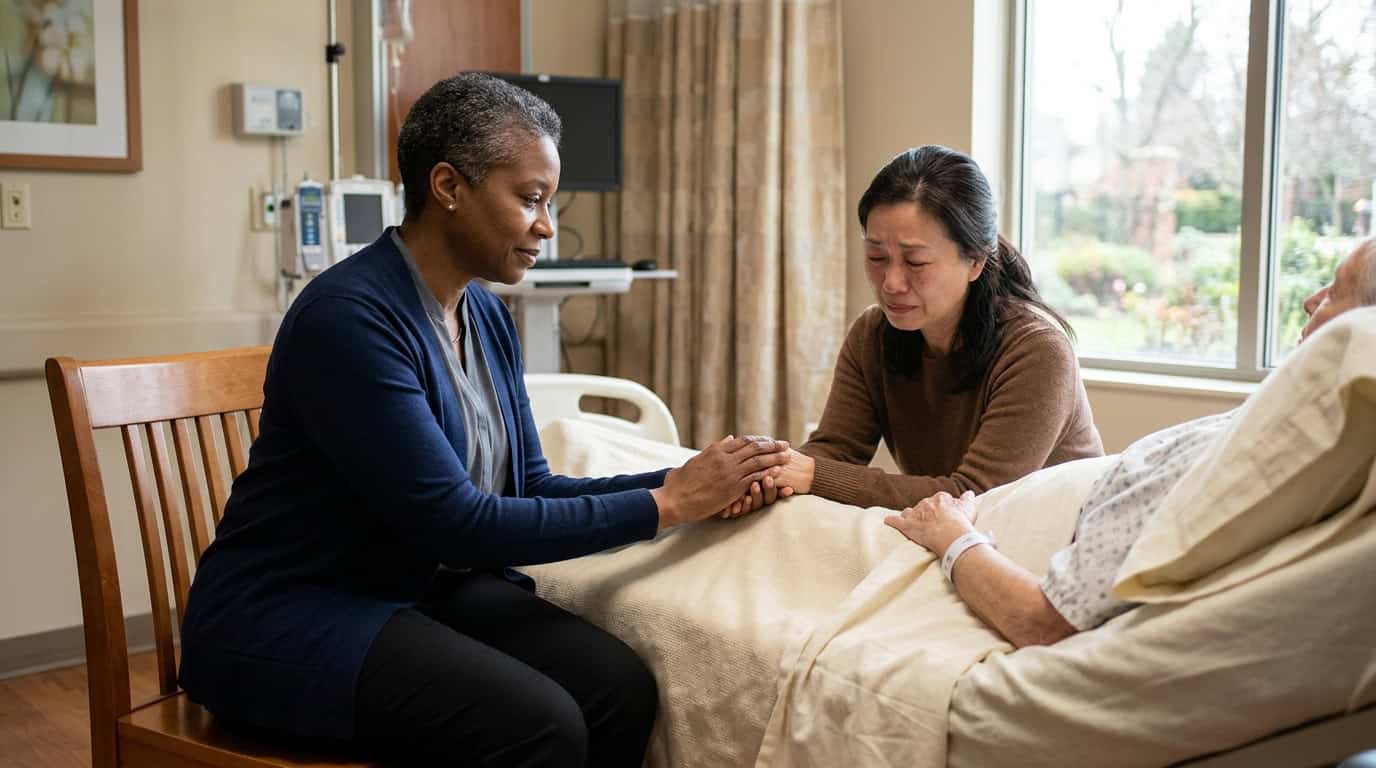
Crucial to the care of patients in their end-of-life process by providing spiritual solace and comfort. Hospice chaplains can work in hospitals, nursing homes, retirement communities, and even patients' homes.
Palliative care chaplains.
Chaplains attached to palliative care teams ministering alongside the clinical staff. The role blends spiritual care, family communication, and grief support across long-arc treatment.
Contract and on-call chaplains.
Ministers serving hospitals through contract or on-call relationships rather than full-time staff positions. Endorsement is still the ecclesiastical document the institution requires on file.
Chaplains pursuing board certification.
Many large medical, hospital, and hospice health care systems require or prefer CPE training. AEGA's endorsement is the ecclesiastical layer alongside the chaplain's CPE units and any board certification pursued through the certifying bodies.
Ordained AEGA ministers entering hospital chaplaincy mid-career.
Pastors and vocational ministers stepping into hospital chaplaincy from local-church ministry. Ordination is the credential the institution requires; endorsement is the ecclesiastical document on file.
How Hospital Chaplain Endorsement Works
Endorsement is the ecclesiastical layer. The training is yours to choose.
Hospital chaplaincy is the most varied of the chaplain tracks. Some hospitals may require different type educational backgrounds, certifications, and ecclesiastical endorsement. Typically, hospice chaplains have a bachelor's degree in religious studies or related subjects. They may also have advanced degrees in theology, divinity, or pastoral studies. Employers may also prefer ordained ministers when filling the role of a hospice chaplain along with ecclesiastical endorsement. Many large medical, hospital, and hospice health care systems require or prefer Clinical Pastoral Education (CPE) training. CPE is delivered by CPE-accredited training centers (not by AEGA). AEGA's role is the ecclesiastical endorsement layer: the document the hospital expects from the chaplain's faith body confirming the candidate's doctrine, ministry, and accountability. To apply, a candidate first completes the ministerial credential application and is approved as an Ordained Minister. Once approved, AEGA Headquarters writes the hospital chaplain endorsement letter or completes the form supplied by the hospital, hospice agency, or health-care system.
Why AEGA
A covenant fellowship for the long career of hospital chaplaincy.
AEGA carries chaplains across decades of medical ministry. The fellowship's four pillars hold through staff change, contract renewal, and the long arc of clinical chaplaincy.
Covering.
Biblical, spiritual accountability that protects chaplains and affirms their God-given assignment. Where there is no accountability, there is no responsibility. AEGA-endorsed hospital chaplains carry covering that does not expire when a contract ends.
Community.
A relational fellowship where chaplains are known by name. The Grapevine monthly newsletter. The Annual Conference Retreat. A special seminar and reception for chaplain spouses each year.
Coaching.
Practical leadership development and continuing education. The Annual Conference Retreat carries CTE sessions on Saturday afternoon with special speakers on subjects relevant to chaplain ministry. Up to 3.0 CEUs per attendance.
Credibility.
An established ecclesiastical endorser since 1976. AEGA's endorsement letter is the document hospitals, hospice agencies, and health-care systems expect on file from a chaplain's faith body.
CPE · The Training Layer
Clinical Pastoral Education sits alongside the endorsement.
Many large medical, hospital, and hospice health care systems require or prefer CPE training. CPE is a structured, supervised clinical training program delivered by accredited CPE training centers. It is not something AEGA delivers directly; it is delivered by the centers that hospital and hospice systems already recognize. AEGA's endorsement runs in parallel to the CPE units a chaplain completes. AEGA chaplains can also pursue continuing education through AEGA's educational branches: Omega Theological Seminary and Evangel Christian University of America. Both schools enroll students from numerous denominations and offer Bachelor's, Master's, and Doctorate degrees by distance learning. AEGA chaplains receive discounted tuition at Columbia International University as part of the AEGA chaplain program benefits.
From an AEGA-Endorsed Chaplain
"I went to the International Minister's Conference to see if I could sense the vision of AEGA. I not only sensed it, but I also wanted to be a part of it."
Jerry Hatfield · Chaplain & Professor · Texas
How to Apply
From AEGA ordination to hospital chaplain endorsement.
01
Apply for AEGA Ordained Minister credentials
The first gate. Hospitals and hospice agencies expect the chaplain to be an ordained minister of a recognized faith body. AEGA's Board of Examiners reviews doctrine, references, and ministry experience for the Ordained Minister tier.
02
Complete the credential review
AEGA mails the Constitution and Bylaws for review before a thorough review by the Credential Committee covering doctrinal alignment, references, and ministry experience. Most credentials are issued within three to five weeks.
03
Request the hospital chaplain endorsement letter
Once approved as an Ordained Minister, the candidate requests an AEGA hospital chaplain endorsement letter or sends AEGA the form supplied by the hospital, hospice agency, or health-care system.
04
Submit to the hospital chaplaincy office
The candidate submits the AEGA endorsement letter to the hiring hospital, hospice agency, or health-care system. AEGA remains the chaplain's endorser through the chaplain's tenure, with annual fellowship renewal and the Chaplain Annual Report Form filed each May 1.
Frequently Asked
Hospital chaplain endorsement, answered.
What is an AEGA Hospital Chaplain Endorsement?
An AEGA Hospital Chaplain Endorsement is the ecclesiastical document AEGA Ministries International issues to candidates serving as chaplains in hospitals, hospice agencies, nursing homes, retirement communities, and other medical settings. The endorsement names the candidate as an ordained AEGA minister in good standing whose doctrine and ministry have been examined and recommended for hospital chaplain service.
How do I become a hospital chaplain?
Hospital chaplains typically hold a bachelor's or graduate degree in religious studies, theology, divinity, or pastoral studies; ordination from a recognized faith body; ecclesiastical endorsement from that body; and Clinical Pastoral Education (CPE) units appropriate to the hiring institution. AEGA covers the ordination and ecclesiastical endorsement layers. CPE is delivered by accredited CPE training centers.
What credentials must I have to be endorsed?
AEGA Ordained Minister credentials. Hospitals and hospice agencies expect the chaplain to be an ordained minister of a recognized faith body. AEGA's ordination credential is the prerequisite the endorsement is built on.
Does AEGA require CPE training?
AEGA itself does not require CPE for endorsement. The hiring hospital or hospice agency may. Many large medical, hospital, and hospice health care systems require or prefer CPE training. CPE is delivered by accredited CPE training centers, not by AEGA.
Can AEGA endorsement be used for hospice chaplaincy?
Yes. Hospice chaplains are crucial to the care of patients in their end-of-life process. They can work in hospitals, nursing homes, retirement communities, and patients' homes. Employers may also prefer ordained ministers when filling the role of a hospice chaplain along with ecclesiastical endorsement.
How long does the endorsement letter take?
Endorsement letters are prepared by the AEGA office once an applicant is approved as an Ordained Minister. The credential review itself is the long pole; most credentials are issued within three to five weeks. Once approved, the endorsement letter follows within days. The annual renewal cycle includes the Chaplain Annual Report Form, with a May 1 deadline each year.
Begin the hospital chaplain endorsement pathway.
Ordination, endorsement, and a Spirit-filled fellowship that carries hospital and hospice chaplains across the long career of medical ministry.